Series: U - Unpublished
Archival pigment print mounted on aluminium Dibond.
Edition of 10 + 3 AP
61 x 50.8 cm / 24 x 20 in
Edition of 5 + 1AP
96.5 x 76.2 cm / 38 x 30 in
Edition of 3 + 1AP
121.9 x 96.5 cm / 48 x 38 in
61 x 50.8 cm / 24 x 20 in
Edition of 5 + 1AP
96.5 x 76.2 cm / 38 x 30 in
Edition of 3 + 1AP
121.9 x 96.5 cm / 48 x 38 in
Signed, titled, numbered, and dated on a label affixed to the verso of the mount
© The Artist

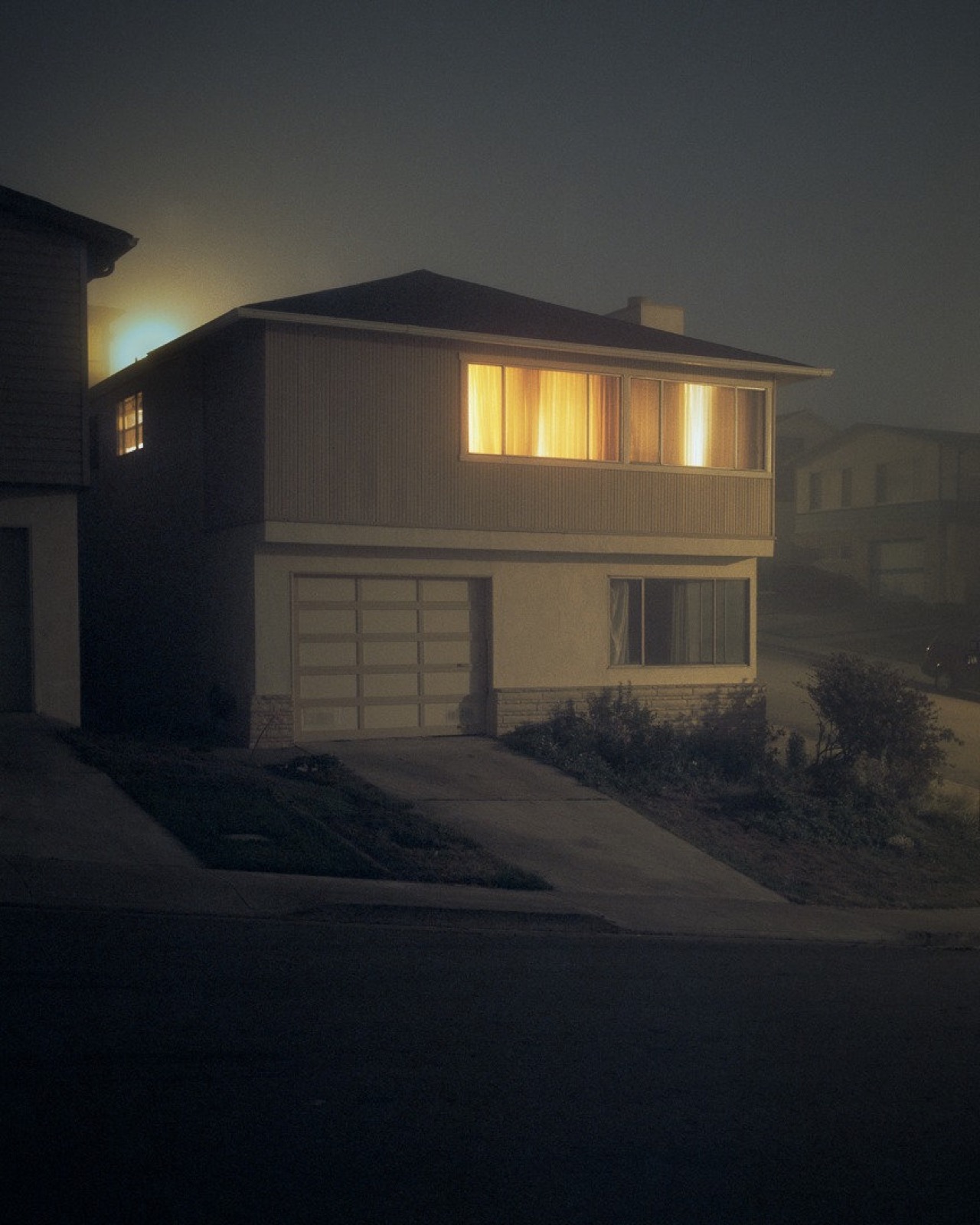
Todd Hido photographs a house that might otherwise pass unnoticed and gives it a strange, quiet intensity.
Nothing in the image is overtly dramatic, yet everything feels charged: the wet street, the empty driveway, the darkened facade, and above all the long row of glowing windows that holds the eye and refuses to let it go. Hido is known for photographing suburban homes at night in ways that blur the line between observation and projection, and this photograph captures that tension beautifully.
The house is closed, self-contained, almost mute. We remain outside, looking in from a distance, with no access to the life suggested behind the curtains. That sense of separation is central to Hido’s work: the buildings are real, ordinary places, yet they become emotional surfaces onto which memory, loneliness, and unease are quietly projected. Here, the warm amber light upstairs does all the work of a figure or a story. It implies presence, but not intimacy; it offers a clue, not an answer.1]
What makes the picture so compelling is its restraint. Hido does not push the scene into melodrama. Instead, he lets atmosphere do the work: the haze softens the edges of the neighborhood, the surrounding houses recede into near-abstraction, and the whole scene seems suspended between the familiar and the uncanny. The image feels less like a document of a specific address than like a fragment of a half-remembered experience, something seen late at night and never fully forgotten.
That is where the photograph lingers. It is not simply about architecture or suburbia, but about the emotional force of looking at something from which one remains excluded. In Hido’s hands, an ordinary home becomes a vessel for uncertainty, longing, and imagination.