Clark Winter American, b. 1951

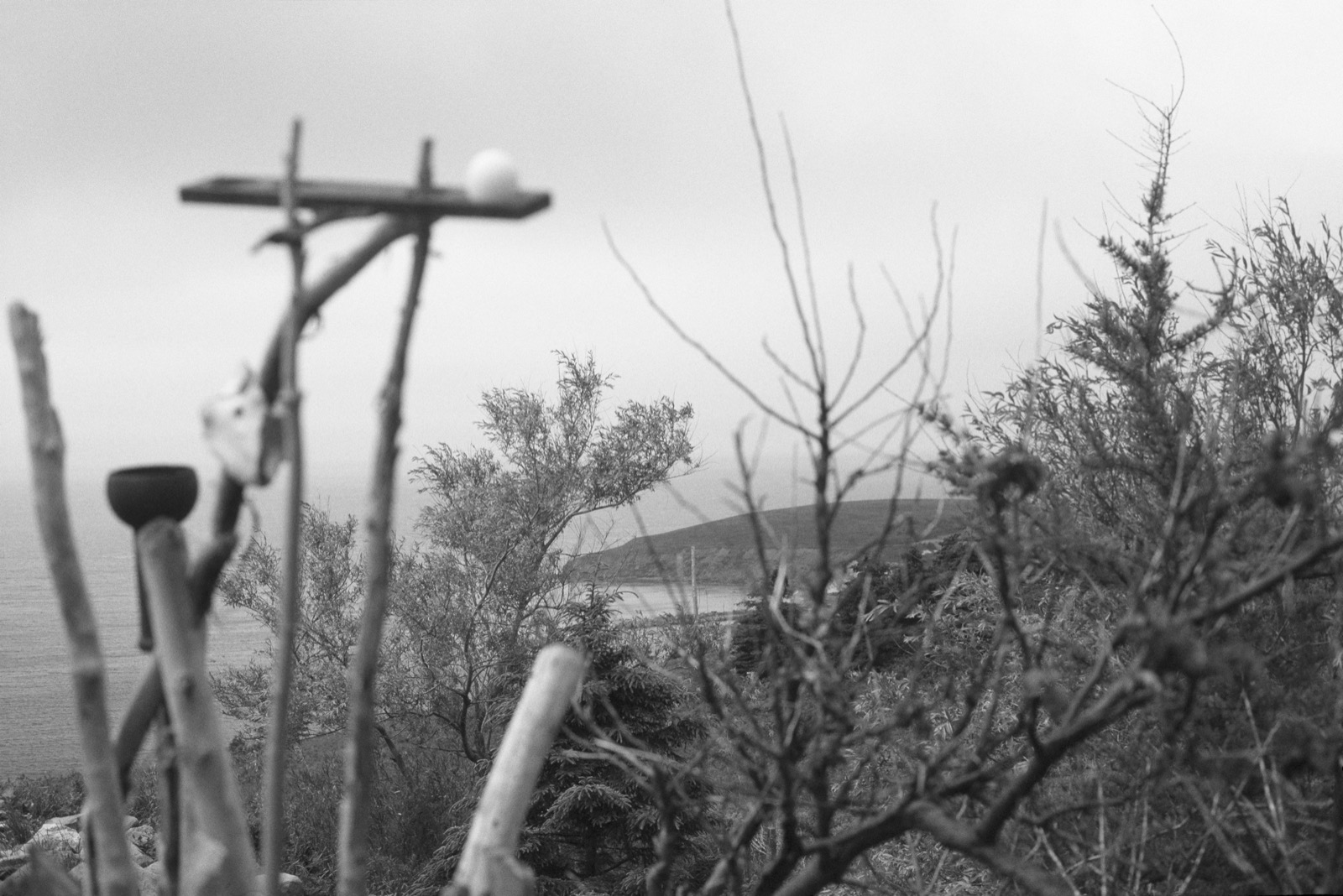
Airborne Egg, 1998.
Series: Free Air. Robert Frank - Hands at Work
Gelatin Silver Selenium Print.
Edition of 8 + 2 AP
20.3 x 26.7 cm / 8 x 10 1/2 in

Edition of 3 + 1 AP
114.3 x 152.4 cm / 45 x 60 in
Hand-signed, titled, and editioned in ink on the verso

The thing about an egg is that it wants to roll. Put it on anything that isn't a nest and it will look for the edge. So it takes a second to register what's wrong here — and once it registers it's the only thing, really — which is that the white sphere balanced on the crossbar of sticks isn't rolling. It's just sitting there on its skinny wooden shelf, against all the odds and most of the physics, as if it had been talked into staying. Airborne is the wrong word and the right one. It hasn't left the ground; it just doesn't seem to be quite resting on it either.

This is one of Robert Frank's totems, the rickety little assemblages he made up in Mabou, Nova Scotia, out of driftwood and beach junk and whatever the Atlantic coughed up — the dark bowl perched on its pole at the left, the lashed sticks, the whole thing pitched at the lip of the headland where the Mabou Coal Mines fall into the sea. Frank, who had more or less walked away from the camera that made him famous, was making these instead: weather, balance, things that wouldn't last the winter.

What Clark Winter does — and it's a sly move — is throw the sculpture out of focus and bring the scrubby foreground branches into perfect sharpness, so the monument goes soft and the weeds get the clarity. The egg floats in the blur like an idea you can't quite hold. You keep wanting to reach in and steady it, and the fact that you can't is exactly what makes the print worth living with. Winter spent years photographing Frank up in Cape Breton, and the selenium-toned silver gelatin gives the grey afternoon a faint metallic weight, the sea barely separable from sky. That's the whole picture: the held breath before the small white thing decides, finally, to roll.