Saul Leiter American, 1923–2013

Untitled, 1959.
Chromogenic Print. Printed 2022.
Image: 34.3 x 22.5 cm / 13 1/2 x 8 7/8 in / Paper: 35.6 x 27.9 cm / 14 x 11 in
Saul Leiter Foundation copyright stamp dated "2022" with signature in pencil by Margit Erb, director, on label and Saul Leiter Foundation edition stamp with print date and edition number in pencil on label affixed to print verso

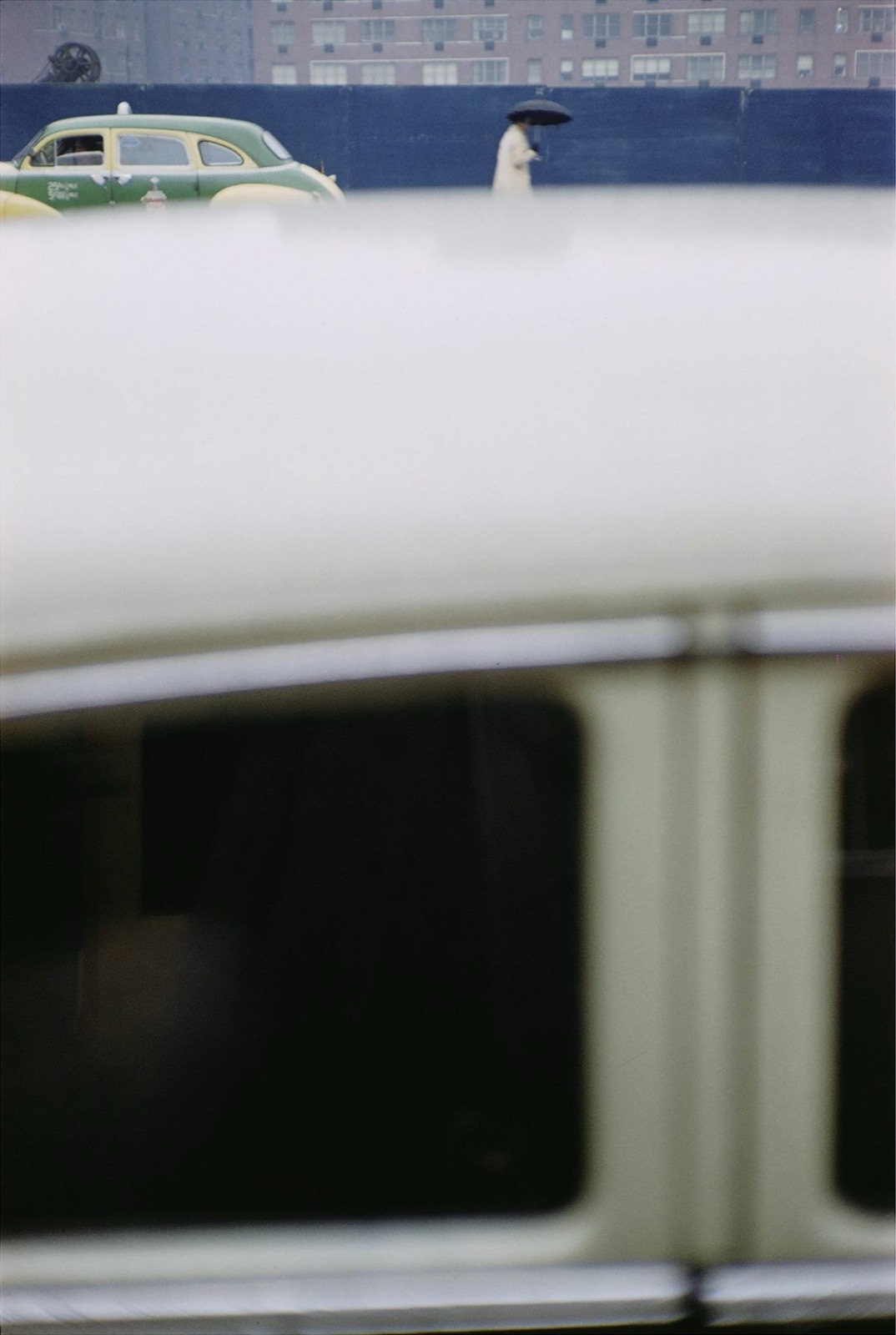
Most of this photograph is given over to something you can't quite see: a soft, creamy slab of out-of-focus car that swells up from the bottom of the frame and takes the whole middle, a dark window floating in it like a held breath. You spend a second or two annoyed, the way you would if someone tall sat down in front of you, before realizing that the obstruction is the picture. Leiter has built the thing back to front. The world we're meant to want — the street, the people, the weather — has been pushed up into a thin bright margin along the top, the leftover strip above the blur.

And what a strip. A green-and-yellow taxi from another era, its body catching the wet light. A figure in a pale coat under a black umbrella, walking out of the frame, indifferent to us. A flat blue hoarding, brick behind it. All of it small, sharp, faintly comic in its smallness, like a postcard glimpsed over a wall. He shot from the hip, through gaps, into reflections, around obstacles; the East Village he barely left was less a subject than a set of these accidents waiting to be honored.

What gets me is the patience required to keep the wrong thing in front and trust it. A 1959 chromogenic frame, printed in 2022 — Leiter's color held back from the world for decades while everyone admired the black-and-white men — and it still does this odd, generous thing: it makes you lean past the beautiful blur to find two strangers and a taxi, and then makes the leaning feel like the whole point.