Cig Harvey British, b. 1973

Three Apricots (Wet), 2023.
Archival Pigment Print.
Edition of 10
50.8 x 40.6 cm / 20 x 16 in

Edition of 7
101.6 x 76.2 cm / 40 x 30 in

Edition of 3
142.2 x 106.7 cm / 56 x 42 in
Hand-signed by the artist, with title, date, and edition number inscribed in ink on an archival label affixed to the reverse side of the mounted photograph.
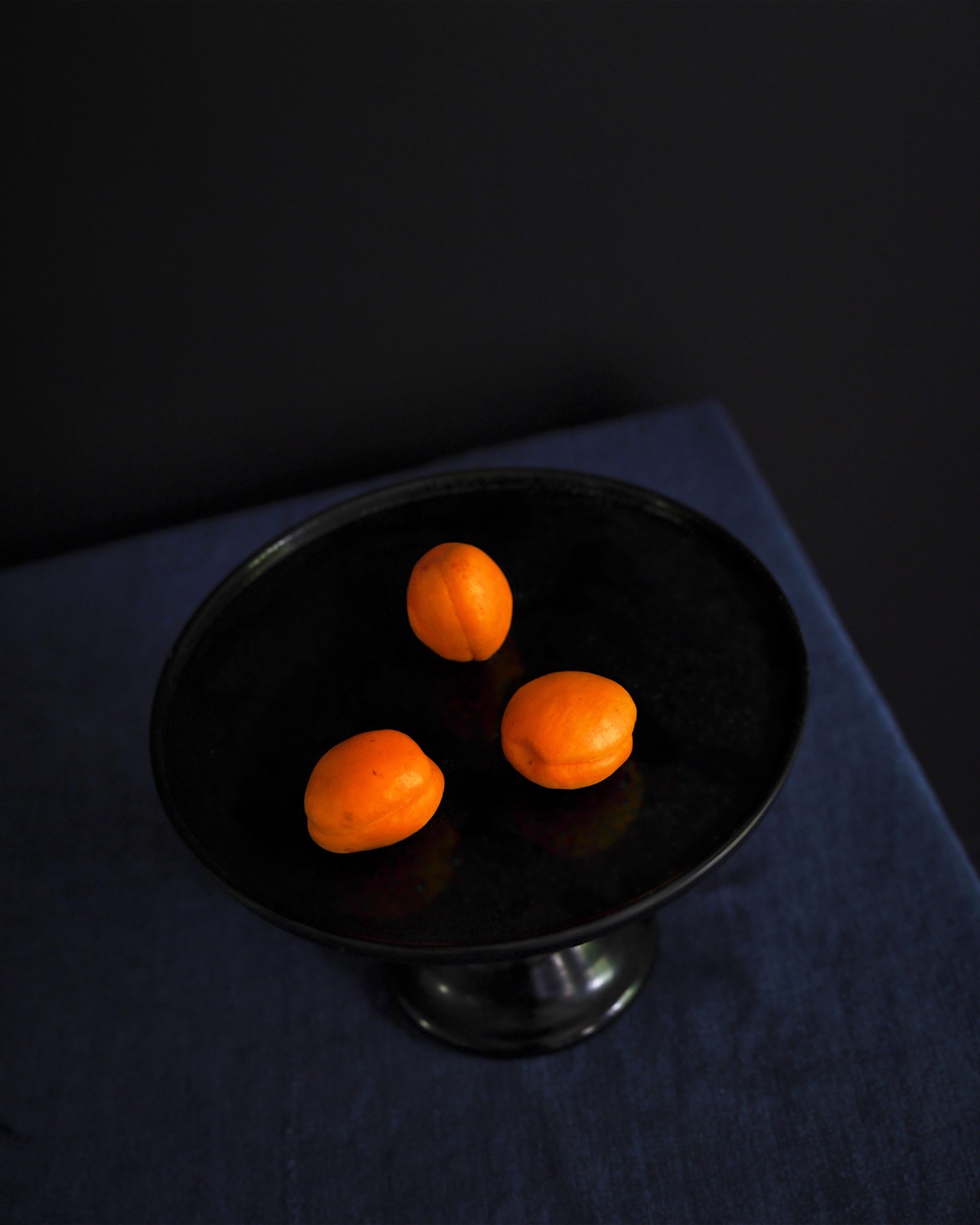
Three apricots, and the seam down the side of each one — that soft cleft where the fruit was once attached to the branch, to the stone, to the idea of growing — turned toward the light as if it were a thing they wished to show us. Cig Harvey has set them in a black footed compote on a field of indigo cloth, and the bowl is so dark that it reads less as a vessel than as a small pool of night the fruit has been allowed to float upon. The water on their skins is the whole event. Each apricot holds a few bright points where the light from the upper left has caught and stopped, and those points are the only argument the picture makes for time: that this is now, that the wetness will not last, that someone reached for these and washed them a moment ago.

What moves me is how few they are. Not a heaped abundance, not the groaning table of the old painters, but three — a number that asks to be counted, that leaves room around itself. Set against so much darkness, they are almost a sentence. Harvey, who has built her work in Maine out of exactly this attention to the ordinary made luminous, knows that scarcity is its own kind of color. The orange does not shout here; it glows the way a coal glows, banked and patient, against the cool blue weave that takes up the lower half of the frame.

I keep returning to the one apricot tipped slightly away, its seam in shadow, declining the light the other two accept. A small refusal. The image does not insist on meaning, and that restraint is its tenderness — it lets the fruit be fruit, wet and orange and briefly here, and trusts you to feel the rest.