Saul Leiter American, 1923–2013

Untitled, n.d.
Chromogenic Print. Printed 2022.
Image: 34.3 x 22.5 cm / 13 1/2 x 8 7/8 in / Paper: 35.6 x 27.9 cm / 14 x 11 in
Saul Leiter Foundation copyright stamp dated "2022" with signature in pencil by Margit Erb, director, on label and Saul Leiter Foundation edition stamp with print date and edition number in pencil on label affixed to print verso

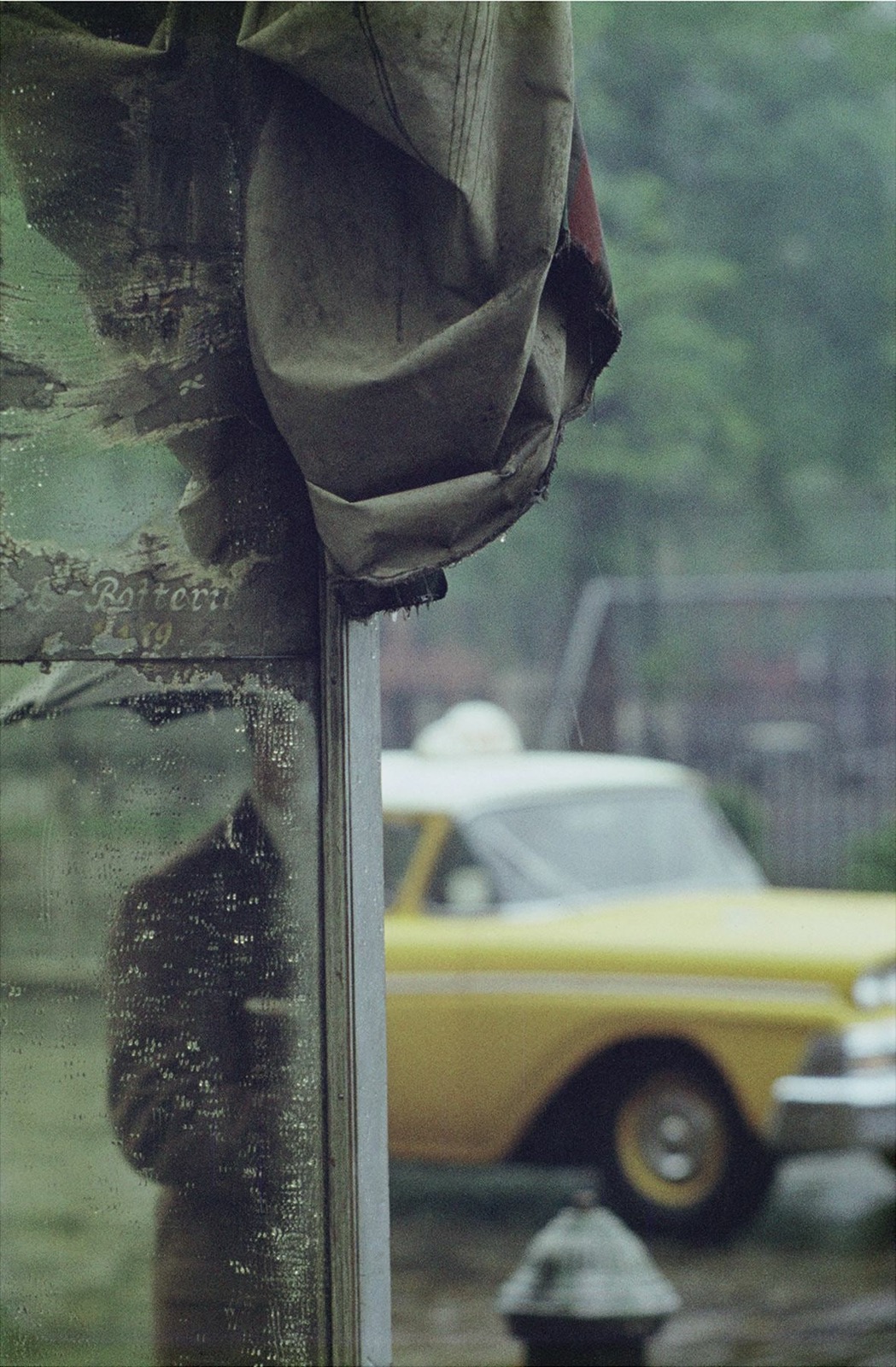
Saul Leiter saw the city the way a painter sees a wet canvas, in veils and fragments, through glass and rain. Here a draped awning sags above a misted shop window, a yellow 1950s sedan glides past, and the ghost of a figure hovers in the steamed pane, half-erased. The picture withholds as much as it shows. Leiter loved precisely this in-between zone, the smear of condensation, the obstruction that becomes the subject, the muted palette of greens and ochres that feels closer to Bonnard and Vuillard than to reportage.

Trained first as a painter, Leiter began making color photographs in New York in the late 1940s, decades before color was taken seriously as art. He pursued it not for fashion but for feeling, building a private body of work he barely troubled to show, content to live quietly above the streets of the East Village he photographed for half a century. He worked in fashion for Harper's Bazaar yet kept his finest pictures for himself, indifferent to a career.

Only in 2006, with the Steidl monograph Early Color, did the world discover one of the quiet pioneers of the medium, a contemporary of the New York School hiding in plain sight. The acclaim of his final years, including the affectionate documentary In No Great Hurry, sealed his place in the canon. Since then his reputation and his market have risen steadily, his prints sought by collectors and museums drawn to their tenderness and restraint. This chromogenic print, made from his archive, distills the essence of his art, the conviction that beauty lives in the overlooked, the blurred, and the briefly glimpsed.