Ray K. Metzker American, 1931–2014

59 AF-1, Chicago, 1959.
Gelatin silver Print. Printed 1989.
14 x 11 in. / 35.6 x 27.9 cm.
Signed and editioned on verso

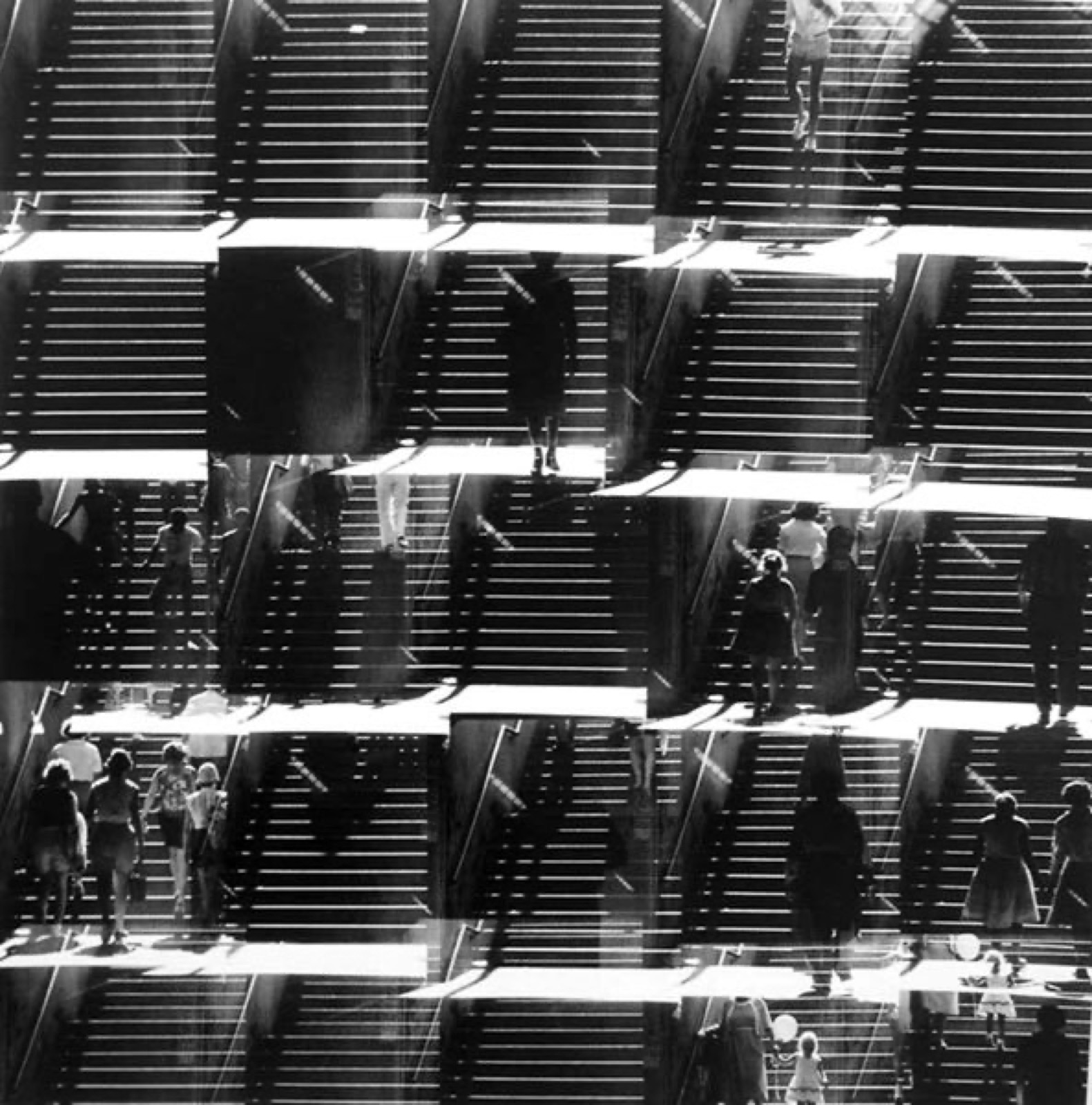
A staircase, seen many times over, becomes a grid of descent. This is one image divided against itself: a multiple exposure that lays bands of stair, banister and shadow one atop the next until the picture reads less like a record of a place than an argument about how a camera holds time. The blacks are absolute, a velvet dark that swallows detail; against them the steps strike out in hard parallel lines, each tread a stroke of white. Figures move through these tiers—a lone man halfway down the second register, emptied of feature; a cluster of women in summer dresses at the lower left; a small child at the bottom edge. They do not know they are being multiplied, stacked, made into rhythm.

The photograph proposes that to see is to accumulate. The eye does not take a street whole; it gathers it in passes, the same descent again and again until the figures dissolve into pattern and the pattern recovers, here and there, a person. This is Chicago in 1959, made by a young photographer schooled where the medium was being rethought as a language rather than a window. It does not say: this happened, once. It says: this is how looking works, by layering, and memory is only the residue of looking done many times.

There is an appetite in such an image—a hunger to have the world more than once. The light is merciless and exact, sun raking the treads into incandescence while the people, against it, go dark and anonymous, returned to the condition of marks. To hold this as a vintage gelatin silver print is to possess the photographer's own decision about how deep the blacks should fall—the object as he weighed it, not a later approximation. Work of these Institute of Design years now hangs in the museums that decide what photography became.