Series: 9 - End Sends Advance Warning
Archival pigment print mounted on aluminium Dibond.
Edition of 10 + 3 AP
20 x 30 in / 50.8 x 76.2 cm
Edition of 5 + 1 AP
30 x 45 in / 76.2 x 114.3 cm
Edition of 3 + 2 AP
38 x 57 in / 96.5 x 144.8 cm
Edition of 1 + 1 AP NFS
59 1/2 x 88 1/2 in / 151.1 x 224.8 cm
20 x 30 in / 50.8 x 76.2 cm
Edition of 5 + 1 AP
30 x 45 in / 76.2 x 114.3 cm
Edition of 3 + 2 AP
38 x 57 in / 96.5 x 144.8 cm
Edition of 1 + 1 AP NFS
59 1/2 x 88 1/2 in / 151.1 x 224.8 cm
Signed, titled, numbered, and dated on a label affixed to the verso of the mount
© The Artist

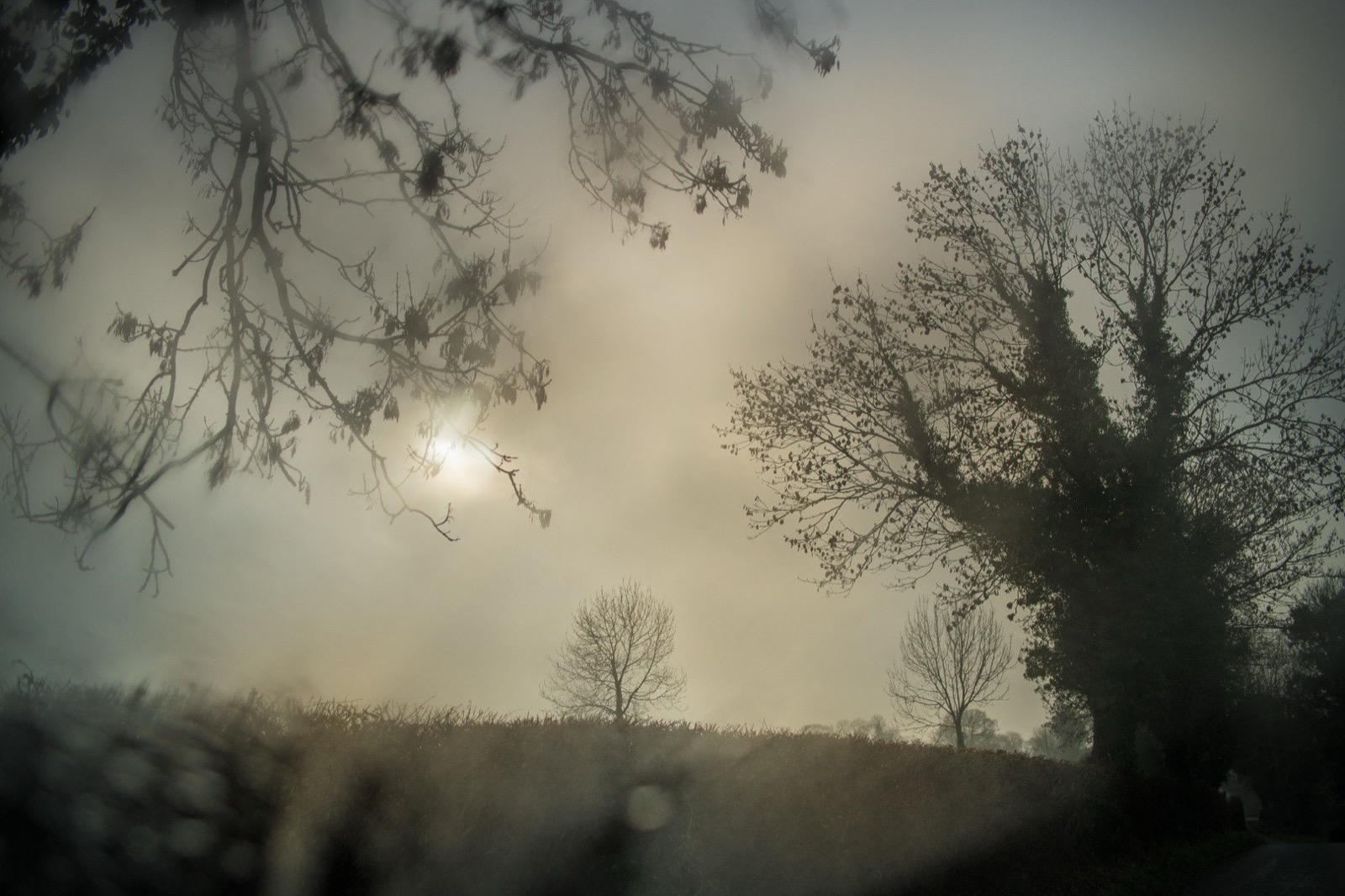
To photograph through a fogged windshield is to admit that the camera never sees the world directly, only the surface it must look through. Here the evidence of that surface is everywhere: the smeared bokeh at the lower edge, the bloom of light where moisture catches the sun, the soft veil that turns a row of bare trees into a rumor of trees. Hido does not clean the glass. He keeps it, and in keeping it he makes the picture confess how it was made—from a car, at a remove, by someone passing rather than arriving.
The composition is almost classical and then refuses to be. Branches hang into the frame from above like a torn proscenium; the sun is a dull coin pressed behind cloud; a single full tree holds the right edge while smaller silhouettes recede along a hedge that drops, finally, into a pale road. Everything legible is also dissolving. This is the paradox the image insists on: the more atmosphere a photograph supplies, the less it tells us, and the more we are made to supply ourselves. We read longing into the haze because the haze withholds fact.
What endures from Hido's long landscape work—the body that runs through his books and his place among the most collected American photographers of his generation—is this refusal of the document's promise. The print, mounted to Dibond and offered at scales up to nearly five feet across, asks to be stood before like weather. To look is to be reminded that mood is not found in a place but conferred on it, and that we consume such pictures precisely because they let us mistake our own ache for the world's.