Gelatin Silver Print.
Image: 34 x 23.5 cm / 13 3/8 x 9 1/4 in / Paper: 27.9 x 35.6 cm / 11 x 14 in / Frame: 49.5 x 36.8 cm / 19 1/2 x 14 1/2 in
Signed, titled "NYC," and dated "1955" in ink on the recto; Tate Modern exhibition frame with Tate Modern labels affixed to the verso
© The Artist
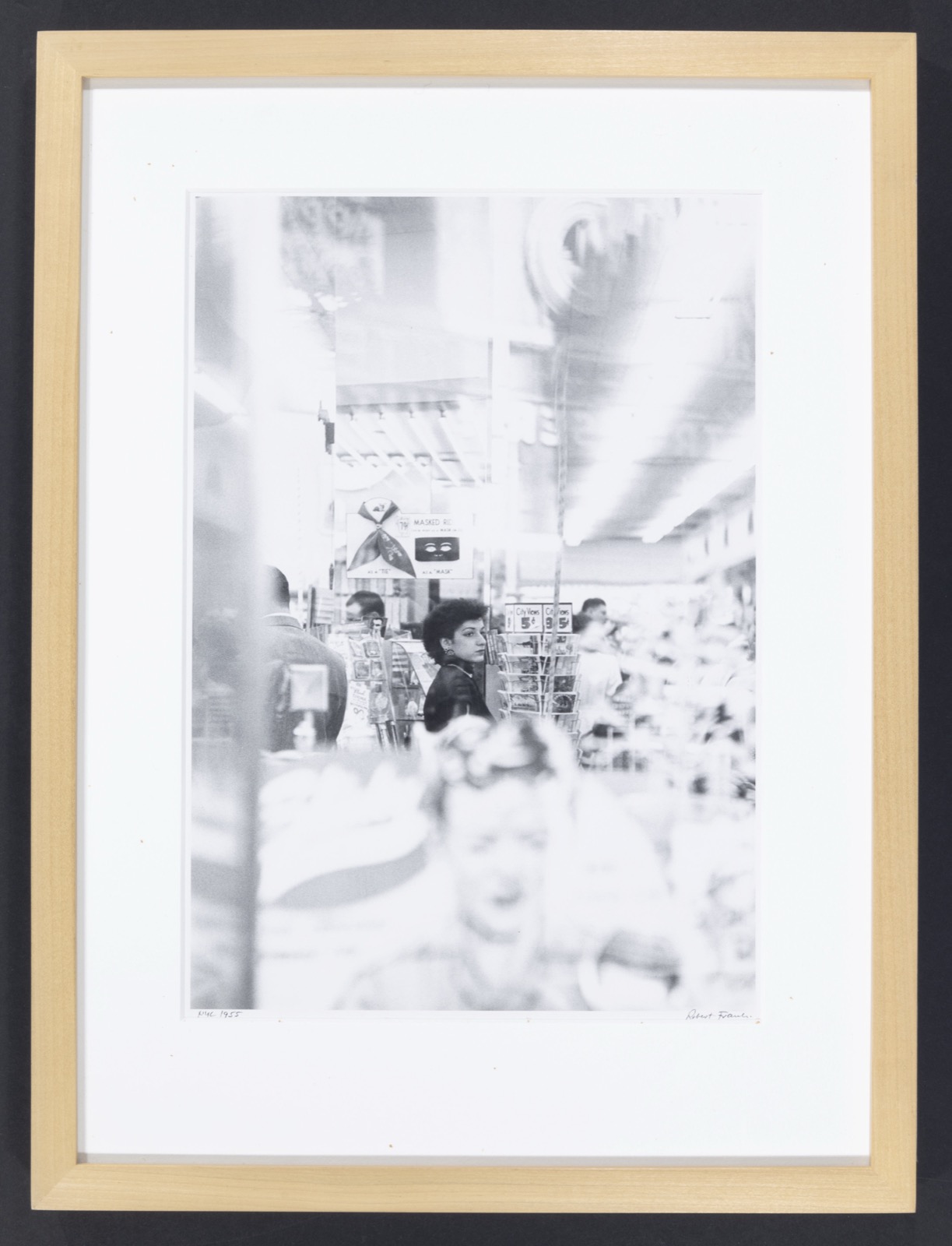
The whole frame is flooded — light leaking in from the top like an overexposed memory, the upper third dissolving into white as if the store itself were evaporating. And in the middle of all that haze, one fixed point: a young woman with dark curly hair and big drop earrings, turned in three-quarter profile, looking back over her shoulder at the camera. Everything else swims. She holds still. It's the oldest trick in the street-photography book and it never stops working — the single sharp gaze inside the blur, the human note held while the chord around it smears.
Look closer and the five-and-dime gives up its small change: a wire counter-rack, the price signs stamped 5¢ and the rest, blurred shoppers stacked behind her, a tilted sign with two cartoon eyes peering out of the murk. Down at the bottom the dolls' faces float up out of focus, all bland painted cheer, and her live, wary face answers them across the frame. That's the music of it — Woolworth's as a cheap heaven of mass-produced smiles, and one real person caught not smiling, just clocking the man with the camera. This is the loose, grainy, accidental-looking vision that *The Americans* taught a whole generation to trust.
Frank made carelessness into a style and then walked away from it. The National Gallery holds his archive; MoMA and the Met hold the rest; the road-book changed what a photograph was allowed to feel like. A vintage print of an interior this fugitive — this much light spilling through — is the picture breathing as he printed it, before the canon caught up.