Todd Hido American, b. 1968

2424-b, 1999.
Series: 2 - Outskirts
Archival pigment print mounted on aluminium Dibond.
Edition of 10 + 3 AP
61 x 50.8 cm / 24 x 20 in
Sold Out

Edition of 5 + 1AP
96.5 x 76.2 cm / 38 x 30 in

Edition of 3 + 1AP
121.9 x 96.5 cm / 48 x 38 in

Edition of 1 + 1 AP NFS
187.3 x 149.9 cm / 73 3/4 x 59 in
Signed, titled, numbered, and dated on a label affixed to the verso of the mount
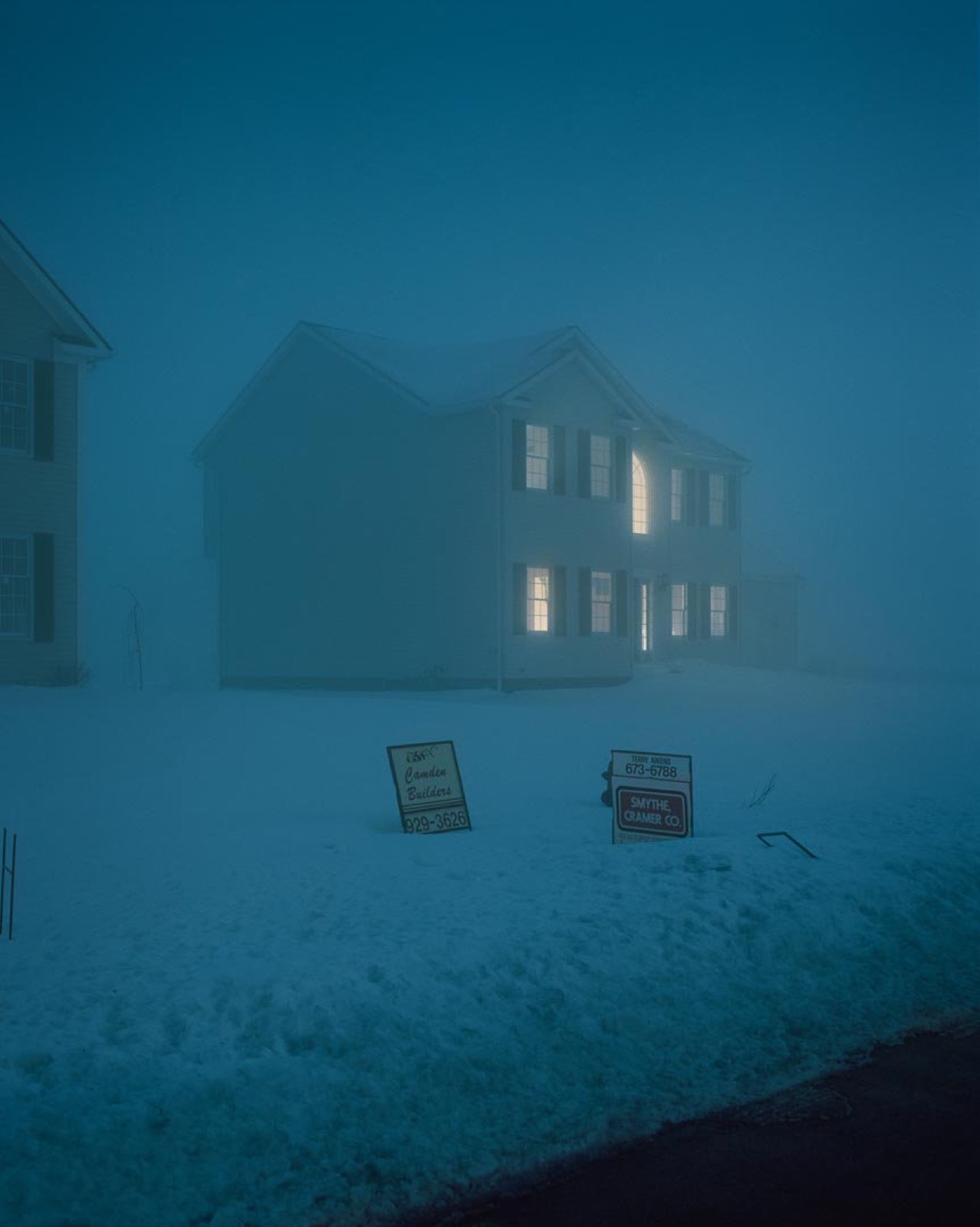
Two real-estate signs stand in the snow, Camden Builders and Smythe, Cramer Co., each with its phone number, and they tell us what the lit windows would rather we forget: this house is for sale. It is not yet anyone's home. The glow behind the glass, that single bright pane on the upper floor leaking light like a held breath, persuades us that someone is inside, waiting, while the signs insist that no one is, that the warmth is staged, a builder's courtesy left burning to sell an empty room. To photograph a house at dusk is to photograph longing; Todd Hido knows this, and withholds the consolation. The fog does the rest, dissolving the eaves of the neighbor's house at the left edge until the street itself seems unfinished, a development still becoming what it advertises.

What we are looking at is desire with the price tag still attached. The blue cold flattens everything it touches, yet refuses to let the picture become a document; it is too beautiful, and its beauty is the argument. Hido shoots from the snowbank, low, the way a stranger would idle at the curb, and the photograph admits the voyeurism it depends on. This is the central image of "Outskirts," the series that secured his standing and entered collections from SFMOMA to the Whitney: the suburban facade made strange, neither threatening nor safe, only available. We are taught to read a lit window as intimacy. Here it is inventory. The lesson is that the two readings cannot be told apart, and that the camera, which promises to settle the question, only deepens it.