Gelatin Silver Print.
Image: 34.3 x 23.2 cm / 13 1/2 x 9 1/8 in / Paper: 35.6 x 27.9 cm / 14 x 11 in / Frame: 46.7 x 36.8 cm / 18 3/8 x 14 1/2 in
Signed in ink on the recto; Tate Modern exhibition frame with Tate Modern labels affixed to the verso
© The Artist
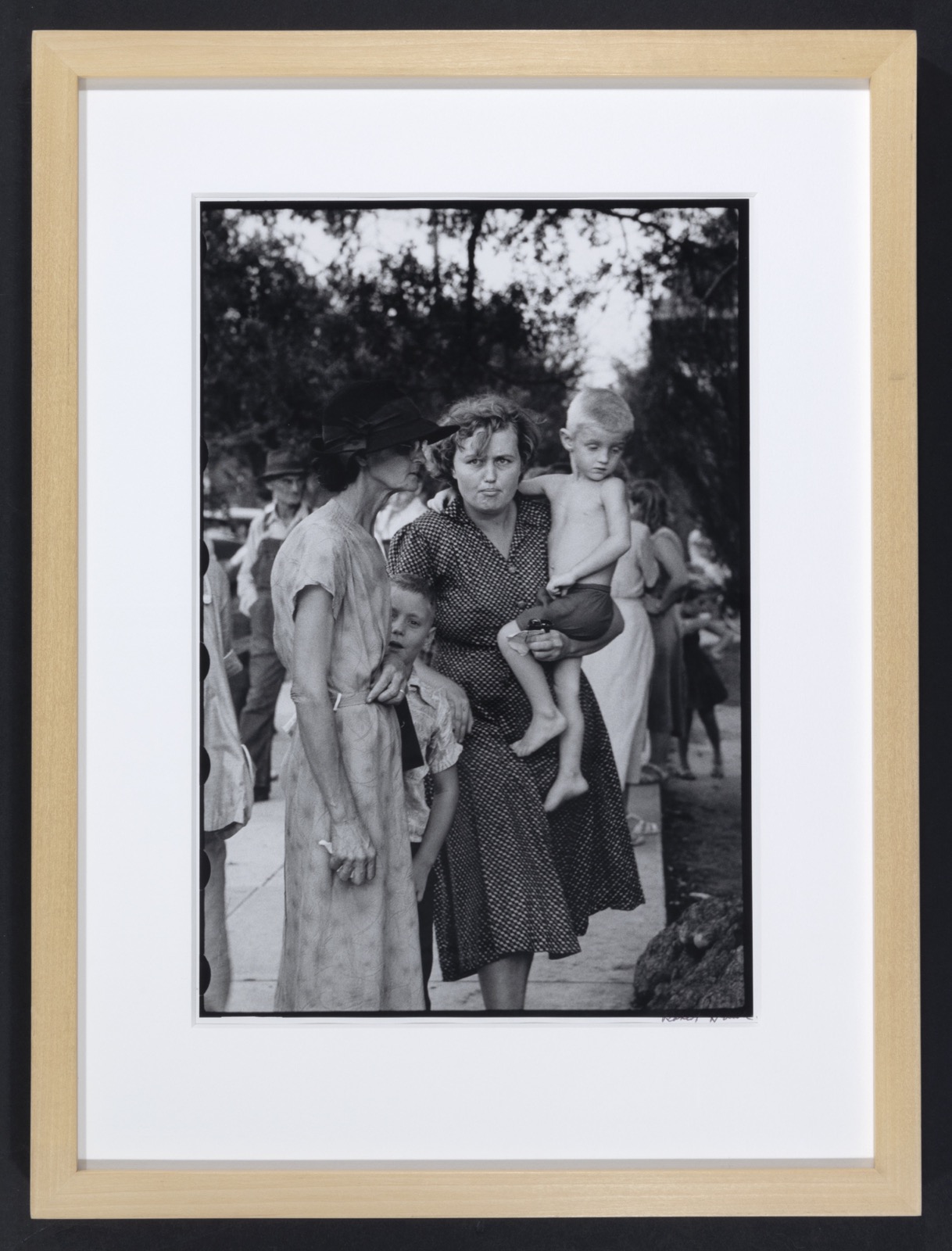
A photograph of strangers on a Southern street becomes, almost against its will, a verdict on a nation. Three generations stand pressed together at the curb: a gaunt older woman in a faded print dress, hat tilted, cigarette at her lips, her face creased into suspicion; a younger woman in polka dots holding a barefoot, shirtless boy on her hip; a second child burrowing against the women, half-hidden. They are waiting for something we are not permitted to see. What the picture records is not the event but the posture of those enduring it.
To look here is to be looked at. The older woman returns the gaze with a hostility that indicts the act of photographing itself, while the mother's eyes drift past the lens, exhausted, elsewhere. This refusal to perform is precisely the evidence the image gathers. Behind them the crowd dissolves into soft gray—a man in a hat, figures along the sun-blanched sidewalk, dark summer trees pressing down. The grain is coarse, the light flat and merciless, the framing tilted as if grabbed on the move. Nothing is composed for our comfort.
This is the vision that, gathered into a single book three years later, taught photography to distrust its own charm and reinvented what an American picture could confess. A vintage print from these years carries the maker's own contemporaneous hand—the trace of the moment the negative was first made visible—and the work now anchors the national photographic archive and the great museum collections. To hold such a print is to hold not nostalgia but knowledge: the appetite to see, and the cost of being seen.